What is leadership? The word “leadership” itself brings variety of images such as an explorer, political leader and business executive (Kruse 2013). In any metaphor, leadership is defined as the capacity to influence, inspire and maximize the efforts of people to achieve common goal (Kruse 2013). According to Kruse (2013), leadership involves empowerment by sharing clear objectives and provide information, knowledge and methods to successfully realize vision.
Theme 4: Managing Change
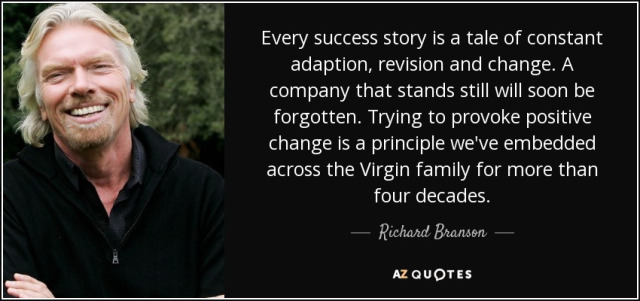
Image 1: Leadership Quote by Richard Branson (Richard Branson 2017)
According to Mullins and Christy (2013), change is an unavoidable continuous event that involves any modification in how things are observed, organized, processed and maintained.
Theme 3: Most Effective Leadership & Management Styles & Approaches
Management and leadership have some similar but not identical concept. In 1977, Zaleznik stated that both managers and leaders involve social influences in working towards a common vision (Algahtani 2014). According to Yuki (2010), leadership compromises complex capacity to influence the team through structuring, inspiring and empowerment to move towards organizational success. In contrast, Kotterman (2006) indicated management as administrative, executive and supervisory positions that use peoples’ efforts to accomplish objectives by using power and control (Bohoris and Vorria n.d.).
Theme 2 – The Challenge of Managing Diverse Teams

Figure 1. Diversity Elements (Decker 2014)
Brookins (2017) defined diversity as various attributes include ethnicity, education, geographic location, religious and political beliefs, sexual orientation and socioeconomic background among different individualities. According to Kreitz (2008), managing diversity involves top leadership’s commitment, strategic organizational diversity plan, training and performance assessment to achieve positive outcomes (Kreitz 2008). Due to the complexity of globalized business world, today’s workplace have transitioned from traditional hierarchical model into flatter, less-structured paradigms and highly diversify team (Tavakoli 2015).
Theme 1 : Leadership and Ethics
Theme 1 – Leadership and Ethics
After numerous companies’ scandals, the importance of moral leadership is emphasized to focus ethical organizational accountability (Bloomberg Business 2010).Ethical leadership is normative and appropriate practices in two-way communication, trustworthy, reinforcement, and principled decision-making to guide subordinates in meeting standardized ethical models (Hassan et al. 2013). Wart (2014) highlighted two ethics fundamentals; deontological that focuses on divine command theories in professional moral management and teleological ethics which emphasizes broader inclusiveness for shareholders.

Figure 1. Ethical vs. Unethical Leadership (2014)

